

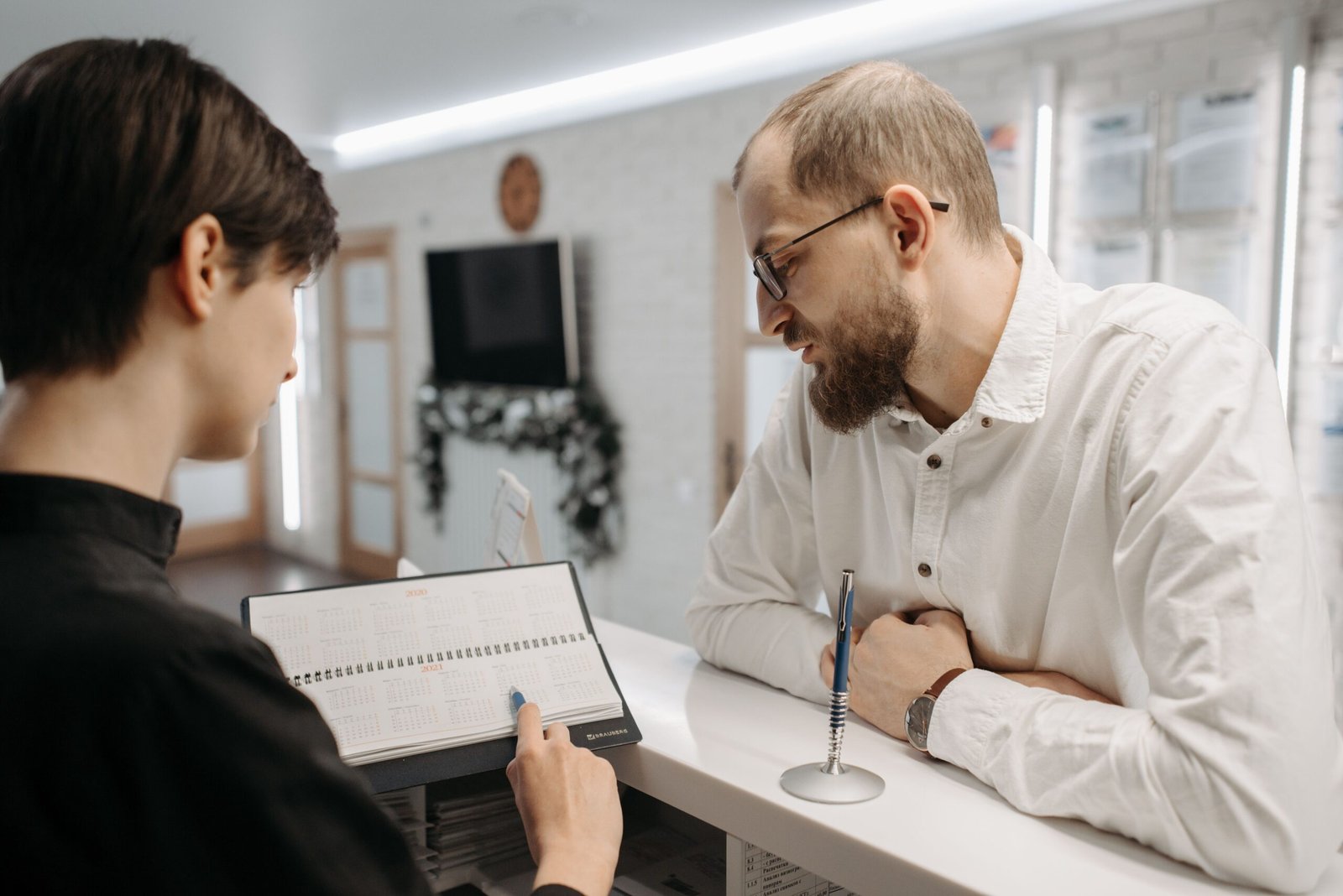
If someone followed a practitioner through a typical Tuesday at an allied health practice, they’d find something surprising.
The clinical work — the assessments, the treatment plans, the hands-on patient time — often accounts for less than half the day. The rest goes to admin. Answering the same phone questions, chasing no-shows, processing health fund claims, entering patient details into systems that don’t talk to each other.
None of this is why the practitioner went into allied health. And increasingly, none of it needs to be done by a human.
Here are the six admin tasks that allied health practices are still doing manually in 2026 — and what AI automation does instead.
1. Answering routine phone enquiries
A staff member picks up every call, answers the same ten questions — bulk billing, parking, appointment availability, referral requirements — and fields interruptions throughout the clinical day.
The average allied health practice receives 30–50 calls per day. Research suggests that up to 70% of those involve questions that could be answered without human involvement. That’s 20–35 calls per day that don’t need to reach the front desk — but currently do.
An AI chatbot or voice agent handles routine enquiries automatically, 24 hours a day. Patients get an immediate answer. Staff get their day back.
2. Booking and confirming appointments
A patient calls or emails to request an appointment. A staff member checks availability, confirms the time, sends a manual confirmation, and adds the booking to the system.
After-hours bookings are where practices lose the most ground. A patient who wants to book at 8pm has two options: leave a voicemail or book online. If the online booking experience is clunky — or doesn’t exist — they book with whoever makes it easiest.
An AI chatbot handles the entire booking flow — checking availability, confirming the appointment, sending the SMS confirmation, and updating the practice management system. No staff involved, at any hour.
3. Chasing no-shows and sending appointment reminders
A staff member manually calls or texts patients before their appointment. When a patient doesn’t show, someone follows up by phone to rebook. This takes significant time and often falls through when the practice is busy.
No-shows cost allied health practices an average of $150–$300 per missed appointment. For a practice with five practitioners seeing eight patients each per day, even a 10% no-show rate represents $600–$1,200 in lost revenue every day.
Automated reminder sequences go out 48 hours and 2 hours before every appointment. If a patient cancels or doesn’t respond, the system triggers a rebooking prompt automatically. No staff member makes a single call. No-show rates consistently drop 30–40%.
4. Collecting and processing intake forms
New patients receive a paper or PDF intake form at reception, fill it in manually, and hand it back. A staff member enters the details into the practice management system. The process takes 10–15 minutes per new patient and introduces transcription errors.
An AI system sends a digital intake form automatically when a new patient books. The patient completes it before they arrive. The data flows directly into the practice management system. No paper, no data entry, no errors.
Beyond the time saving, digital intake removes the awkward first-appointment experience where a new patient sits in the waiting room filling out a clipboard. They arrive informed and prepared. The appointment starts on time.
5. Managing health fund and Medicare billing queries
Patients call to ask whether the practice bulk bills, whether their health fund is accepted, what their gap payment will be, or how to claim. Each call takes 3–5 minutes and interrupts the clinical flow.
Billing questions are among the most common reasons patients call before their first appointment — and among the most predictable. The answers rarely change.
An AI chatbot handles billing FAQ responses automatically — bulk billing status, accepted health funds, Medicare item numbers, gap payment estimates. Complex queries get escalated to a staff member. Routine ones don’t.
6. Following up after discharge
A practitioner or admin staff member is supposed to follow up with patients after discharge to check on progress and encourage rebooking. In practice, this falls through regularly — the practice is busy, the follow-up gets pushed back, and the patient doesn’t return.
Patient retention is one of the most undervalued levers in an allied health practice. A patient who completes a course of treatment and doesn’t rebook is a patient who may not return. A timely follow-up — even an automated one — meaningfully increases the likelihood of a second course.
An automated follow-up sequence triggers after a patient’s last appointment. A message goes out at a set interval — checking in, offering a rebooking link, and flagging if the patient hasn’t responded. No staff time required.
The real cost of doing this manually
Taken individually, each of these tasks feels manageable. Together, they add up to 2–3 hours of staff time every day — time that isn’t being spent on patient care, clinical quality, or growing the practice.
The practices automating these tasks aren’t doing it because they have spare budget or a tech-savvy team. They’re doing it because the cost of not automating — in staff time, in missed bookings, in no-shows, in patients who don’t come back — is higher than the cost of fixing it.
None of this requires replacing the front desk, overhauling the booking system, or understanding how the technology works. It requires identifying which tasks are consuming the most time and putting the right automation in place — usually within one to three weeks.
“The average allied health practice spends 2–3 hours per day on admin that could be handled automatically. That’s 10–15 hours per week. 500–750 hours per year. What would your practice do with that time back?”
|
Want to see which of these your practice could fix first? Book a free 30-minute AI Opportunity Mapping Session with Vertuvo. vertuvo.com/contact-us/#book-demo Or download the free guide: The Silent Practice Killer |